
Licensed, Insured & Bonded | 30+ Years In Business | Free Roof Inspections
Roof Repair Or Roof Replacement? How Eastern Idaho Homeowners Can Tell The Difference

Roof Repair Or Roof Replacement? How Eastern Idaho Homeowners Can Tell The Difference

Roof Repair

Roof Repair Or Roof Replacement? How Eastern Idaho Homeowners Can Tell The Difference

Not sure if your roof needs repaired or replaced? Here is how Eastern Idaho and Western Wyoming homeowners can make a smarter roofing decision before spending money.

By Done Right Roofing

Quick Links

One of the most common questions homeowners ask is simple:

“Can this roof be repaired, or do I need to replace the whole thing?”


That is a fair question.

Nobody wants to replace a roof before they have to. At the same time, nobody wants to keep throwing money at small repairs if the roof is already past its useful life.

In Eastern Idaho and Western Wyoming, this decision matters even more because roofs deal with snow, wind, hail, ice, and big temperature swings. A roof that looks okay from the driveway may have problems hiding under the surface.

Here is how I look at it after 25 years of roofing in this area.

Start With The Age Of The Roof

Age is not everything, but it is one of the first things to look at.

If your asphalt shingle roof is fairly new and has one small problem, repair usually makes sense. If your roof is older and has multiple issues, replacement may be the smarter long-term choice.

As a general rule:

  • A newer roof with isolated damage is usually a repair candidate
  • A middle-aged roof depends on condition, installation quality, and storm history
  • An older roof with widespread wear may be better replaced

The age of the roof is only part of the story. I have seen older roofs that held up well because they were installed right and maintained. I have also seen newer roofs fail early because of poor installation, bad ventilation, or cheap materials.

The National Roofing Contractors Association has homeowner guidance on asphalt shingle roof inspection, maintenance, and repair, which is a good reminder that regular maintenance matters before small issues become larger problems.
Read NRCA homeowner guidance here.

When Roof Repair Makes Sense

Roof repair can be the right move when the damage is limited to one area.

Common repair situations include:

  • A few missing shingles
  • One damaged pipe boot
  • A small leak around a vent
  • Loose flashing
  • Minor wind damage
  • A damaged ridge cap
  • One problem valley
  • A leak caused by a specific installation issue

If the rest of the roof is in good shape, a targeted repair can extend the life of the roof and save money.

For example, if a pipe boot cracks and causes a leak, that does not mean the whole roof is bad. Pipe boots wear out. Flashing can loosen. Sealants can fail. Those are often repairable.

Homeowners in
Idaho Falls,
Rexburg,
Rigby,
Shelley, and
Blackfoot often deal with wind-related shingle damage that may be repairable if caught early.

If you only have a small problem area, start with a
roof repair inspection before assuming you need a full replacement.

When Roof Replacement Makes More Sense

Roof replacement starts to make more sense when the problems are spread across the whole roof.

Signs that replacement may be the better option include:

  • Shingles are curling across multiple slopes
  • Granules are heavily worn
  • Shingles are brittle and cracking
  • There are multiple leaks
  • Repairs are becoming frequent
  • There is widespread hail damage
  • Wind damage affects several roof slopes
  • The roof decking feels soft
  • The roof was installed incorrectly
  • The roof has poor ventilation and premature aging

At some point, repair becomes a temporary patch. You may stop one leak, but another one shows up a few months later.

That is when replacement becomes the more responsible recommendation.

If the roof is already near the end of its life, it may be better to compare material options and replacement costs instead of paying for repeated repairs.
Learn more about roof replacement services.

Not Sure Which Direction To Go?

A roof inspection can help you decide whether a repair will solve the problem or whether replacement is the smarter long-term move.


Schedule A Roof Inspection

The Problem With Cheap Fixes

There is a difference between a smart repair and a cheap patch.

A smart repair addresses the actual problem. A cheap patch just covers the symptom.

For example, smearing roof cement around a leak may slow water down for a little while, but it usually does not solve the real issue. If flashing is wrong, shingles are lifted, or water is backing up in a valley, the repair needs to address the source.

A good roofing contractor should be able to show you what failed, explain why it failed, and tell you what needs to be done.

If the answer is vague, be careful.

Check The Roof System, Not Just The Shingles

A roof is a system.

Shingles are only the top layer. Underneath, you have decking, underlayment, flashing, drip edge, ventilation, fasteners, ridge caps, pipe boots, valleys, and more.

When deciding between repair and replacement, the full system matters.

A roof may need replacement if:

  • Decking is damaged
  • Underlayment is failing
  • Flashing was installed wrong
  • There is poor attic ventilation
  • Ice and water protection is missing where it should be used
  • The shingles were nailed incorrectly
  • The roof has multiple layers

A roof can look decent from the outside and still have system issues that shorten its life.

If ventilation may be part of the problem, read our related guide:
Why Roof Ventilation Matters In Eastern Idaho Homes.

What About Insurance Claims?

Storm damage is another reason to get a professional opinion.

If your roof was damaged by wind or hail, your insurance may be involved. That does not automatically mean the roof will be approved for replacement. It depends on the policy, the type of damage, the amount of damage, and the insurance adjuster’s findings.

A local roofing contractor can inspect the roof, document damage, take photos, and explain what they are seeing.

Homeowners should avoid guessing. If you had hail, wind, or falling debris, get the roof inspected before assuming everything is fine.

IBHS publishes research and ratings related to impact-resistant asphalt shingles and hail performance, which can be useful when homeowners are comparing materials after storm damage.
View IBHS shingle impact-resistance information.

If your home was hit by a recent storm, visit our
storm damage roof repair page.

Eastern Idaho Homes Need Local Judgment

A roof in Idaho Falls may age differently than a roof in Victor or Driggs. A home in Pocatello may deal with different wind exposure than a home near Rigby or Shelley. Jackson Hole roofs may see heavier snow and more demanding winter conditions.

That is why local judgment matters.

The right repair or replacement decision depends on:

  • Roof age
  • Roof pitch
  • Shingle condition
  • Ventilation
  • Snow exposure
  • Wind exposure
  • Past storm damage
  • Installation quality
  • Leak history
  • Budget
  • Long-term plans for the home

There is no one-size-fits-all answer.

Done Right Roofing serves homeowners throughout
Idaho Falls,
Rexburg,
Rigby,
Shelley,
Blackfoot,
Pocatello,
Victor,
Driggs, and
Jackson Hole.

Questions To Ask Before Replacing Your Roof

Before agreeing to a full roof replacement, ask:

  • Can this be repaired safely and properly?
  • How much life does the roof have left?
  • Are the shingles brittle?
  • Is the damage isolated or widespread?
  • Is the decking solid?
  • Is ventilation part of the problem?
  • Are there photos of the damage?
  • What materials will be used?
  • What warranty is included?
  • Will the old roof be torn off?
  • Will flashing, drip edge, and pipe boots be replaced?

A trustworthy roofing contractor should be comfortable answering these questions.

If you are already leaning toward replacement, compare material options here:
Best Roofing Materials For Eastern Idaho And Western Wyoming Homes.

Questions To Ask Before Choosing A Repair

Before choosing a repair, ask:

  • What caused the issue?
  • Will this repair stop the leak long term?
  • Are there other weak spots nearby?
  • Is this a temporary fix or a proper repair?
  • Could matching shingles be a problem?
  • Does the repair affect any warranty?
  • Is replacement likely within the next few years?

Sometimes repair is the best decision. Sometimes it only delays the inevitable. The key is knowing which situation you are in.

Do Not Wait On Active Leaks

If you have an active leak, do not wait.

Water can damage insulation, drywall, framing, electrical, flooring, and personal belongings. Even a slow leak can create mold or rot if it goes unnoticed.

Common interior signs of roof leaks include:

  • Brown ceiling stains
  • Bubbling paint
  • Musty smell
  • Damp insulation
  • Water around light fixtures
  • Soft drywall
  • Staining near chimneys or vents

If you see these signs, call a roofing professional as soon as possible.

Local Roofing Tip

If your roof is older and you are seeing repeated issues after wind, snow, or hail, do not look at each repair by itself. Look at the pattern. A few isolated problems may be repairable, but repeated leaks across different areas usually point to a bigger roof system issue.

Final Thoughts

Roof repair and roof replacement both have their place.

The right answer depends on the age of your roof, the amount of damage, the quality of the existing installation, and how well the roof is handling Eastern Idaho weather.

If the damage is small and the roof is healthy, repair may be the smart move.

If the roof is worn out, leaking in multiple areas, or showing widespread storm damage, replacement may save money and stress in the long run.

A good roofer will not just tell you what costs the most. They will tell you what makes the most sense.

Need An Honest Roof Inspection?

Not sure whether your roof needs repaired or replaced? Contact Done Right Roofing for a clear, local roof inspection in Idaho Falls, Rexburg, Rigby, Shelley, Blackfoot, Pocatello, Victor, Driggs, Jackson Hole, and nearby communities.

Request A Roof Inspection

Related Roofing Resources

(more…)

How Eastern Idaho Weather Damages Your Roof: What Homeowners Should Watch For

How Eastern Idaho Weather Damages Your Roof: What Homeowners Should Watch For

Roof Maintenance

How Eastern Idaho Weather Damages Your Roof: What Homeowners Should Watch For

Eastern Idaho roofs deal with snow, wind, hail, sun, and freeze-thaw damage. Here is what homeowners should watch for before small roof problems become expensive.

By Done Right Roofing

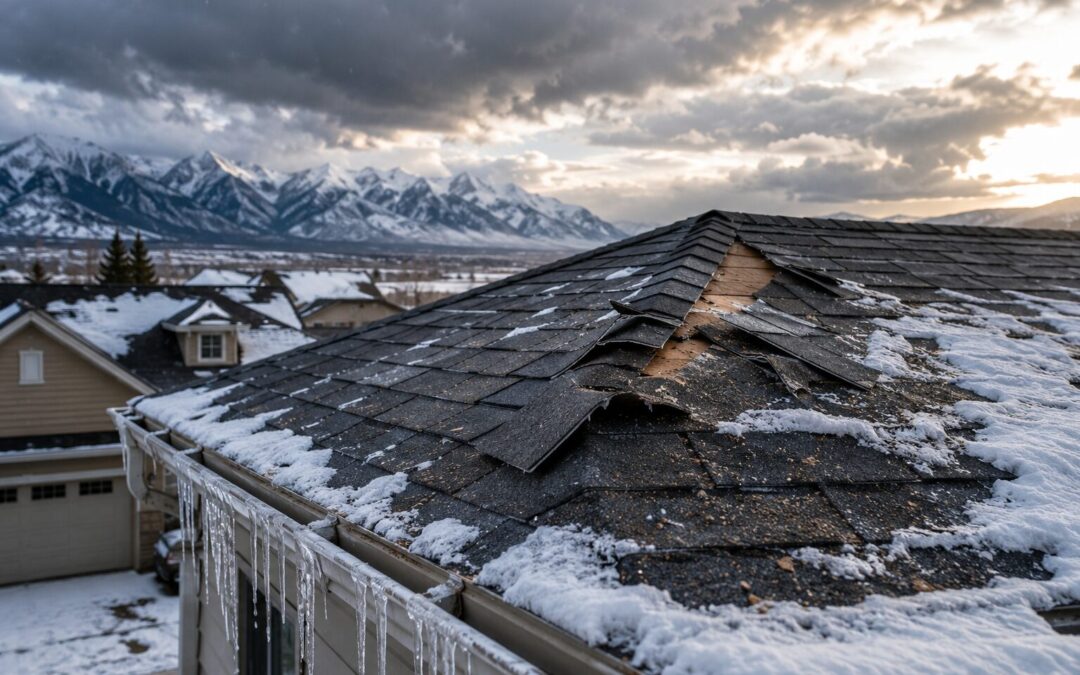
Snow-covered asphalt shingle roof in Eastern Idaho with storm clouds and mountains in the background
Snow, wind, hail, ice, and fast temperature swings can all shorten the life of a roof in Eastern Idaho and Western Wyoming.
If you own a home in Eastern Idaho or Western Wyoming, your roof takes a beating.Around here, roofs deal with heavy snow, hard wind, hail, freezing nights, hot summer sun, and quick temperature swings. A roof in
Idaho Falls,
Rexburg,
Rigby,
Shelley,
Blackfoot,
Pocatello,
Jackson Hole,
Victor, or
Driggs does not have the same life as a roof in a mild climate.

That does not mean every roof is in trouble. It just means homeowners need to know what to look for.

After 25 years of working on roofs in this region, I can tell you this: most serious roofing problems do not start as major problems. They start small. A lifted shingle. A cracked pipe boot. A loose piece of flashing. A soft spot around a vent. A small leak that only shows up during the right kind of storm.

The sooner you catch it, the cheaper it usually is to fix.

Quick Links

Why Eastern Idaho Is Hard On Roofs

Eastern Idaho weather is tough because it changes fast.

One week can bring sunshine, wind, rain, snow, and freezing temperatures. That kind of weather cycle is hard on shingles, flashing, sealants, roof vents, gutters, and roof decking.

Here are the biggest issues we see on
local roofs.

1. Wind Damage

Wind is one of the most common causes of roof damage in Eastern Idaho.

Strong gusts can lift shingles, break the adhesive seal, loosen ridge caps, and expose nail heads. Sometimes the shingles do not blow completely off. They just lift enough to let water get underneath.

That is where homeowners get fooled.

From the ground, the roof may look fine. But once the seal is broken, that shingle is more vulnerable during the next storm.

Signs of wind damage include:

  • Shingles that look lifted or curled
  • Missing shingles
  • Shingle tabs that flap in the wind
  • Exposed nails
  • Loose ridge caps
  • Pieces of roofing material in the yard
  • Leaks after a windy storm

Wind damage is especially common in open areas around
Rigby,
Shelley,
Blackfoot, and rural properties where there is not much protection from surrounding buildings or trees.

If you suspect wind damage, start with a professional
roof inspection before the next storm makes the problem worse.

Had Recent Wind Damage?

If shingles are missing, lifted, curled, or scattered in the yard, do not wait for the next storm. A small wind-damaged area can turn into a leak fast.


Schedule A Roof Inspection

2. Hail Damage

Hail can be tricky because damage is not always obvious from the ground.

Large hail can bruise shingles, knock granules loose, dent vents, damage gutters, and shorten the life of the roof. Even smaller hail can cause problems when it hits older shingles that are already brittle from age and sun exposure.

The Insurance Institute for Business & Home Safety tests asphalt shingles against manufactured hailstones to better understand impact resistance and real-world roof performance.
Read IBHS hail impact research here.

Common signs of hail damage include:

  • Random dark spots on shingles
  • Granules collecting in gutters or downspouts
  • Dents on metal vents or flashing
  • Dings in gutters
  • Damage to siding, window screens, or vehicles
  • Shingles that feel soft or bruised when inspected up close

If your neighborhood had hail and your car, fence, or gutters show damage, it is smart to have the roof checked too.

Learn more about our
storm damage roof repair services.

3. Snow Load And Ice Buildup

Snow is part of life in Eastern Idaho and Western Wyoming. Most roofs are designed to handle normal winter conditions, but problems happen when snow sits, melts, refreezes, and creates ice buildup.

Ice dams are one of the biggest winter roofing problems.

An ice dam forms when heat from the attic melts snow on the roof. The melted water runs down toward the colder edge of the roof and refreezes. Over time, that creates a ridge of ice. Water can then back up under the shingles and leak into the home.

The National Weather Service explains that ice dams can form when snow melts and refreezes near roof edges, creating conditions that can lead to water backing up into the structure.
Read National Weather Service ice dam guidance here.

Warning signs of ice dam problems include:

  • Large icicles along the eaves
  • Water stains on ceilings or walls
  • Wet insulation in the attic
  • Ice buildup in gutters
  • Peeling paint near roof edges
  • Leaks that show up during snow melt

Ice dams are not just a shingle problem. They are often connected to attic ventilation, insulation, air leaks, and roof design.

If your home has repeated winter roof issues, read our guide on
why roof ventilation matters in Eastern Idaho homes.

4. Freeze-Thaw Damage

Freeze-thaw cycles are rough on roofing materials.

Water gets into tiny gaps around shingles, flashing, vents, nails, or cracks. Then it freezes and expands. Then it melts. Then it freezes again.

That movement can slowly open gaps and make small problems worse.

Freeze-thaw damage is common around:

  • Chimneys
  • Skylights
  • Valleys
  • Pipe boots
  • Wall flashing
  • Roof vents
  • Low-slope roof sections

A tiny opening in September can become a real leak by February.

Local Roofing Tip

After a hard winter or spring windstorm, walk the property and look at the roof from the ground. Check for shingles in the yard, granules near downspouts, lifted ridge caps, and new ceiling stains inside the home. Those small signs are often the first clue that the roof needs attention.

5. Sun And Heat Damage

People think of snow when they think about roofing in Idaho, but summer sun matters too.

UV exposure dries out shingles over time. Older shingles can become brittle, crack, curl, or lose granules. South-facing roof slopes usually age faster because they get more direct sunlight.

Signs of sun damage include:

  • Curling shingles
  • Cracked shingles
  • Faded color
  • Granule loss
  • Brittle shingle tabs
  • Exposed fiberglass mat

If your roof is over 15 years old, summer heat and winter freeze cycles may both be working against it.

If you are trying to decide whether to fix the issue or start fresh, see our post on
roof repair vs. roof replacement in Eastern Idaho.

6. Poor Ventilation

A roof system is more than shingles.

Ventilation matters. A properly ventilated attic helps move heat and moisture out of the roof system. When ventilation is poor, the attic can trap heat in the summer and moisture in the winter.

Poor ventilation can lead to:

  • Premature shingle aging
  • Ice dam problems
  • Mold or mildew in the attic
  • Rusted nails
  • Soft decking
  • Higher energy bills
  • Condensation on roof sheathing

Many homeowners think they have a roofing leak when they actually have a ventilation or condensation problem. A good roof inspection should check both.

When Should You Have Your Roof Inspected?

You should consider a roof inspection if:

  • You had a recent wind or hail storm
  • Your roof is more than 12 to 15 years old
  • You see shingles in the yard
  • You notice water stains inside the home
  • You see granules in the gutters
  • Your gutters or vents are dented
  • You are buying or selling a home
  • You have recurring ice buildup in winter
  • You are not sure how much life your roof has left

A roof inspection is not just about finding leaks. It is about finding weak points before they become expensive.

Can You Inspect Your Roof From The Ground?

You can spot some problems from the ground, but you cannot see everything.

Use binoculars or your phone camera zoom and look for:

  • Missing shingles
  • Uneven shingle lines
  • Lifted edges
  • Damaged ridge caps
  • Sagging areas
  • Rusted flashing
  • Debris in valleys
  • Granules near downspouts

Do not climb on the roof if it is steep, icy, wet, or damaged. Roofs are dangerous, and walking on shingles the wrong way can create more damage.

Repair Or Replace?

Not every roof problem means you need a full replacement.

A local roofing contractor may be able to repair:

  • A few missing shingles
  • Damaged pipe boots
  • Loose flashing
  • Minor wind damage
  • Small leak areas
  • Damaged ridge caps

Replacement may make more sense if:

  • The roof is near the end of its life
  • Shingles are brittle across the whole roof
  • There is widespread hail or wind damage
  • The decking is soft or damaged
  • Repairs are becoming frequent
  • The roof has multiple active leaks
  • The roof was installed poorly the first time

A good roofer should explain both options clearly. You should not feel pressured into a full replacement if a repair will solve the issue.

If your roof is getting older, compare your options here:
roof replacement services.

Why Local Roofing Experience Matters

Roofing in Eastern Idaho is different from roofing in other places.

A roofer who understands this area knows how wind hits open farmland, how snow sits in valleys, how ice forms on north-facing slopes, and how fast summer sun can age shingles. They also understand the needs of homes in Idaho Falls, Rexburg, Rigby, Shelley, Blackfoot, Pocatello, Victor, Driggs, and Jackson Hole.

Local experience matters because your roof needs to be built for this climate, not a generic climate.

Final Thoughts

Your roof is one of the most important parts of your home. It protects your structure, insulation, electrical, drywall, flooring, and everything inside.

If you think your roof may have storm damage, wind damage, hail damage, ice dam issues, or age-related wear, do not ignore it. A small issue can turn into a major repair fast, especially once moisture gets below the shingles.

A professional roof inspection can give you a clear answer.

Whether you need a small repair, a second opinion, help with storm damage, or a full roof replacement, working with an experienced local roofing company is the best place to start.

Need Your Roof Checked After A Storm?

Contact Done Right Roofing for a local roof inspection in Idaho Falls, Rexburg, Rigby, Shelley, Blackfoot, Pocatello, Victor, Driggs, Jackson Hole, and surrounding areas.


Request A Roof Inspection

Related Roofing Resources

(more…)