
Roof Maintenance
How Eastern Idaho Weather Damages Your Roof: What Homeowners Should Watch For
Eastern Idaho roofs deal with snow, wind, hail, sun, and freeze-thaw damage. Here is what homeowners should watch for before small roof problems become expensive.
By Done Right Roofing

Idaho Falls,
Rexburg,
Rigby,
Shelley,
Blackfoot,
Pocatello,
Jackson Hole,
Victor, or
Driggs does not have the same life as a roof in a mild climate.
That does not mean every roof is in trouble. It just means homeowners need to know what to look for.
After 25 years of working on roofs in this region, I can tell you this: most serious roofing problems do not start as major problems. They start small. A lifted shingle. A cracked pipe boot. A loose piece of flashing. A soft spot around a vent. A small leak that only shows up during the right kind of storm.
The sooner you catch it, the cheaper it usually is to fix.
Quick Links
Why Eastern Idaho Is Hard On Roofs
Eastern Idaho weather is tough because it changes fast.
One week can bring sunshine, wind, rain, snow, and freezing temperatures. That kind of weather cycle is hard on shingles, flashing, sealants, roof vents, gutters, and roof decking.
Here are the biggest issues we see on
local roofs.
1. Wind Damage
Wind is one of the most common causes of roof damage in Eastern Idaho.
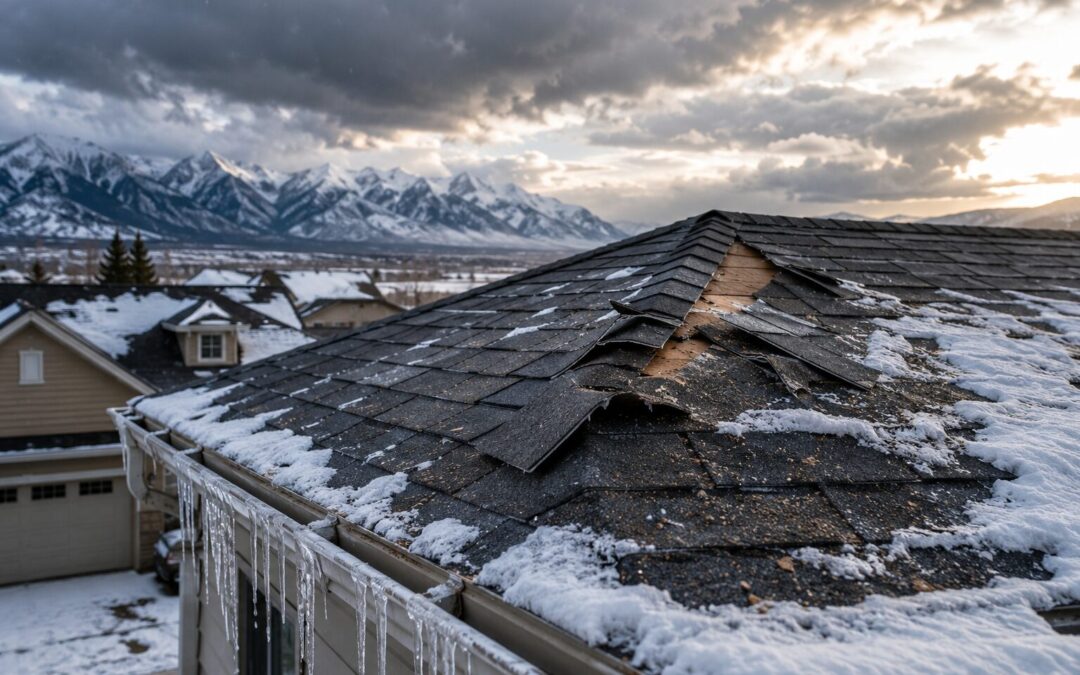
Strong gusts can lift shingles, break the adhesive seal, loosen ridge caps, and expose nail heads. Sometimes the shingles do not blow completely off. They just lift enough to let water get underneath.
That is where homeowners get fooled.
From the ground, the roof may look fine. But once the seal is broken, that shingle is more vulnerable during the next storm.
Signs of wind damage include:
- Shingles that look lifted or curled
- Missing shingles
- Shingle tabs that flap in the wind
- Exposed nails
- Loose ridge caps
- Pieces of roofing material in the yard
- Leaks after a windy storm
Wind damage is especially common in open areas around
Rigby,
Shelley,
Blackfoot, and rural properties where there is not much protection from surrounding buildings or trees.
If you suspect wind damage, start with a professional
roof inspection before the next storm makes the problem worse.
Had Recent Wind Damage?
If shingles are missing, lifted, curled, or scattered in the yard, do not wait for the next storm. A small wind-damaged area can turn into a leak fast.
2. Hail Damage
Hail can be tricky because damage is not always obvious from the ground.
Large hail can bruise shingles, knock granules loose, dent vents, damage gutters, and shorten the life of the roof. Even smaller hail can cause problems when it hits older shingles that are already brittle from age and sun exposure.
The Insurance Institute for Business & Home Safety tests asphalt shingles against manufactured hailstones to better understand impact resistance and real-world roof performance.
Read IBHS hail impact research here.
Common signs of hail damage include:
- Random dark spots on shingles
- Granules collecting in gutters or downspouts
- Dents on metal vents or flashing
- Dings in gutters
- Damage to siding, window screens, or vehicles
- Shingles that feel soft or bruised when inspected up close
If your neighborhood had hail and your car, fence, or gutters show damage, it is smart to have the roof checked too.
Learn more about our
storm damage roof repair services.
3. Snow Load And Ice Buildup
Snow is part of life in Eastern Idaho and Western Wyoming. Most roofs are designed to handle normal winter conditions, but problems happen when snow sits, melts, refreezes, and creates ice buildup.
Ice dams are one of the biggest winter roofing problems.
An ice dam forms when heat from the attic melts snow on the roof. The melted water runs down toward the colder edge of the roof and refreezes. Over time, that creates a ridge of ice. Water can then back up under the shingles and leak into the home.
The National Weather Service explains that ice dams can form when snow melts and refreezes near roof edges, creating conditions that can lead to water backing up into the structure.
Read National Weather Service ice dam guidance here.
Warning signs of ice dam problems include:
- Large icicles along the eaves
- Water stains on ceilings or walls
- Wet insulation in the attic
- Ice buildup in gutters
- Peeling paint near roof edges
- Leaks that show up during snow melt
Ice dams are not just a shingle problem. They are often connected to attic ventilation, insulation, air leaks, and roof design.
If your home has repeated winter roof issues, read our guide on
why roof ventilation matters in Eastern Idaho homes.
4. Freeze-Thaw Damage
Freeze-thaw cycles are rough on roofing materials.
Water gets into tiny gaps around shingles, flashing, vents, nails, or cracks. Then it freezes and expands. Then it melts. Then it freezes again.
That movement can slowly open gaps and make small problems worse.
Freeze-thaw damage is common around:
- Chimneys
- Skylights
- Valleys
- Pipe boots
- Wall flashing
- Roof vents
- Low-slope roof sections
A tiny opening in September can become a real leak by February.
Local Roofing Tip
After a hard winter or spring windstorm, walk the property and look at the roof from the ground. Check for shingles in the yard, granules near downspouts, lifted ridge caps, and new ceiling stains inside the home. Those small signs are often the first clue that the roof needs attention.
5. Sun And Heat Damage
People think of snow when they think about roofing in Idaho, but summer sun matters too.
UV exposure dries out shingles over time. Older shingles can become brittle, crack, curl, or lose granules. South-facing roof slopes usually age faster because they get more direct sunlight.
Signs of sun damage include:
- Curling shingles
- Cracked shingles
- Faded color
- Granule loss
- Brittle shingle tabs
- Exposed fiberglass mat
If your roof is over 15 years old, summer heat and winter freeze cycles may both be working against it.
If you are trying to decide whether to fix the issue or start fresh, see our post on
roof repair vs. roof replacement in Eastern Idaho.
6. Poor Ventilation
A roof system is more than shingles.
Ventilation matters. A properly ventilated attic helps move heat and moisture out of the roof system. When ventilation is poor, the attic can trap heat in the summer and moisture in the winter.
Poor ventilation can lead to:
- Premature shingle aging
- Ice dam problems
- Mold or mildew in the attic
- Rusted nails
- Soft decking
- Higher energy bills
- Condensation on roof sheathing
Many homeowners think they have a roofing leak when they actually have a ventilation or condensation problem. A good roof inspection should check both.
When Should You Have Your Roof Inspected?
You should consider a roof inspection if:
- You had a recent wind or hail storm
- Your roof is more than 12 to 15 years old
- You see shingles in the yard
- You notice water stains inside the home
- You see granules in the gutters
- Your gutters or vents are dented
- You are buying or selling a home
- You have recurring ice buildup in winter
- You are not sure how much life your roof has left
A roof inspection is not just about finding leaks. It is about finding weak points before they become expensive.
Can You Inspect Your Roof From The Ground?
You can spot some problems from the ground, but you cannot see everything.
Use binoculars or your phone camera zoom and look for:
- Missing shingles
- Uneven shingle lines
- Lifted edges
- Damaged ridge caps
- Sagging areas
- Rusted flashing
- Debris in valleys
- Granules near downspouts
Do not climb on the roof if it is steep, icy, wet, or damaged. Roofs are dangerous, and walking on shingles the wrong way can create more damage.
Repair Or Replace?
Not every roof problem means you need a full replacement.
A local roofing contractor may be able to repair:
- A few missing shingles
- Damaged pipe boots
- Loose flashing
- Minor wind damage
- Small leak areas
- Damaged ridge caps
Replacement may make more sense if:
- The roof is near the end of its life
- Shingles are brittle across the whole roof
- There is widespread hail or wind damage
- The decking is soft or damaged
- Repairs are becoming frequent
- The roof has multiple active leaks
- The roof was installed poorly the first time
A good roofer should explain both options clearly. You should not feel pressured into a full replacement if a repair will solve the issue.
If your roof is getting older, compare your options here:
roof replacement services.
Why Local Roofing Experience Matters
Roofing in Eastern Idaho is different from roofing in other places.
A roofer who understands this area knows how wind hits open farmland, how snow sits in valleys, how ice forms on north-facing slopes, and how fast summer sun can age shingles. They also understand the needs of homes in Idaho Falls, Rexburg, Rigby, Shelley, Blackfoot, Pocatello, Victor, Driggs, and Jackson Hole.
Local experience matters because your roof needs to be built for this climate, not a generic climate.
Final Thoughts
Your roof is one of the most important parts of your home. It protects your structure, insulation, electrical, drywall, flooring, and everything inside.
If you think your roof may have storm damage, wind damage, hail damage, ice dam issues, or age-related wear, do not ignore it. A small issue can turn into a major repair fast, especially once moisture gets below the shingles.
A professional roof inspection can give you a clear answer.
Whether you need a small repair, a second opinion, help with storm damage, or a full roof replacement, working with an experienced local roofing company is the best place to start.
Need Your Roof Checked After A Storm?
Contact Done Right Roofing for a local roof inspection in Idaho Falls, Rexburg, Rigby, Shelley, Blackfoot, Pocatello, Victor, Driggs, Jackson Hole, and surrounding areas.